
How AI Systems Make Decisions: System 1 and System 2
Not every AI decision deserves the same amount of computation. System 1 and System 2 are a useful analogy for splitting the work between a fast model, a policy, and a slower investigation. Here is how I think about the split, where it breaks, and why confidence alone should never route a case.
On this page
TL;DR: Not every AI decision deserves the same amount of computation. A fast model can score thousands of routine cases while a small subset gets a deeper investigation. System 1 and System 2 are a handy analogy for that split, as long as you remember it is an analogy. The part that matters is the policy in the middle, which should never route a case on model confidence alone.
This is part 1 of a two-part series. Part 2 covers how the parameters behind a fast prediction get learned.
A payment processor can screen thousands of routine transactions an hour. A small share of them needs a much closer look. How do you divide the work?
System 1 and System 2 are the analogy I reach for. The terms come from cognitive psychology and were popularized by Daniel Kahneman. System 1 is relatively fast, automatic cognition. System 2 is slower, more effortful. They are not two separate processors in the brain, and I would not read them as a rigid taxonomy of AI systems either.
Fast predictions and deliberate computation
A System 1 style model takes an input and returns a direct prediction. A transaction model might look at the amount, the device, the location, and recent account activity, then output a fraud-risk score. It doesn’t need to write out a chain of reasoning first.
A System 2 style process spends more computation. It pulls account history, compares explanations, checks evidence, or asks a person to review. It may use an LLM, but it could just as well use search, optimization, simulation, plain software, or human expertise.
Speed and accuracy are different properties. A large model can do heavy computation in one inference pass, and a multi-step process can still get it wrong.
Three ways to build a decision system
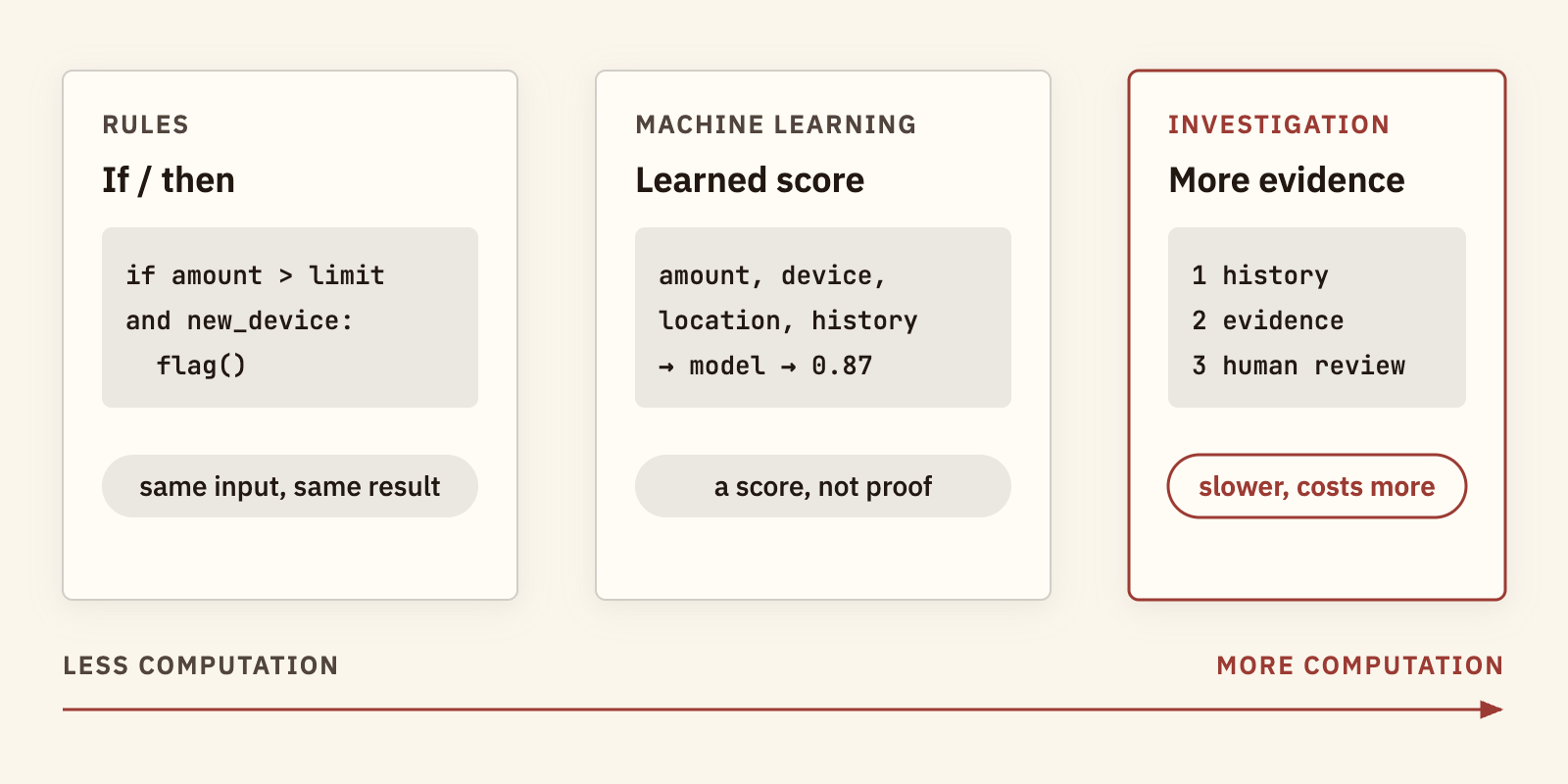
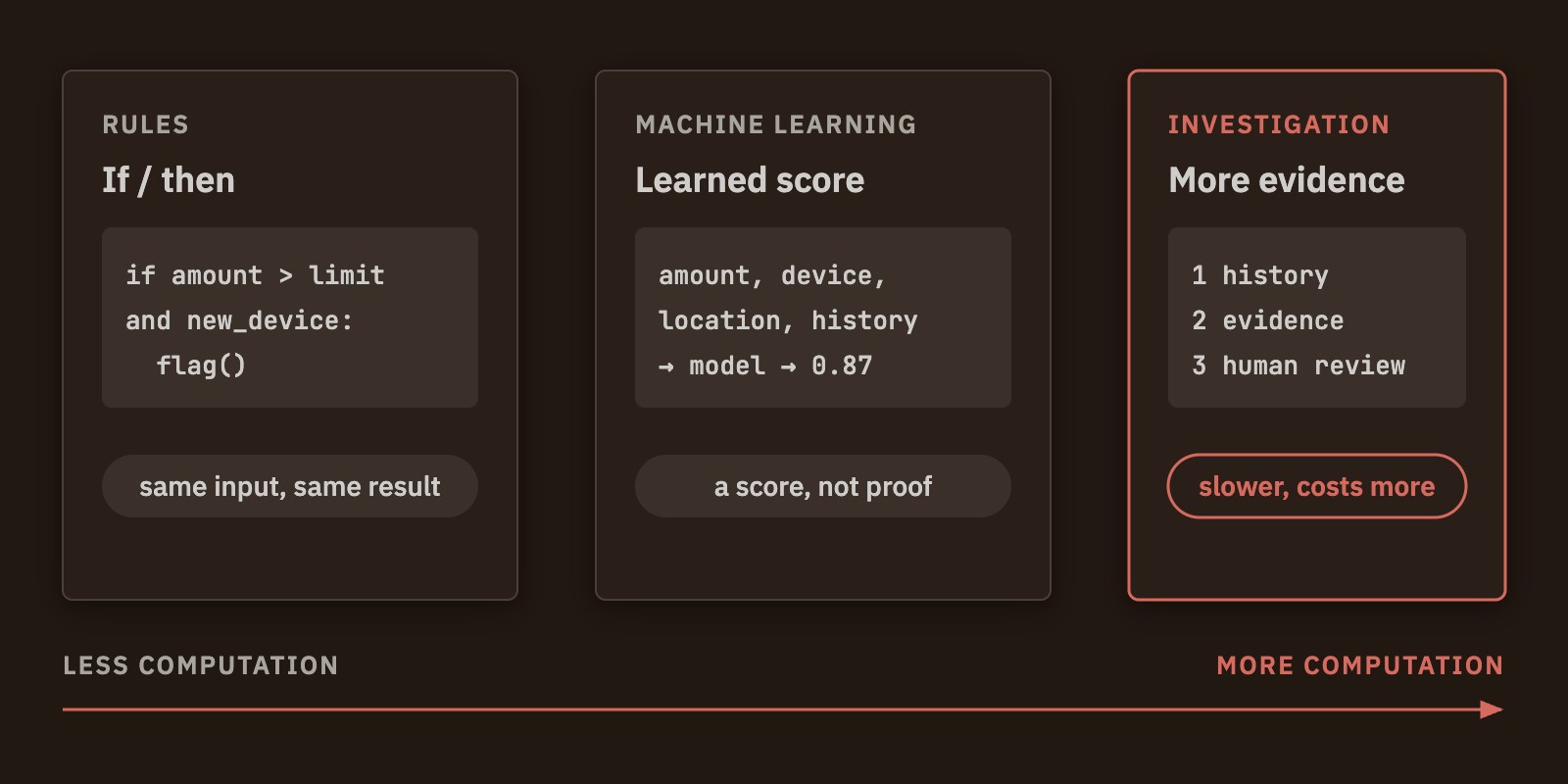
Rule-based programming. You write the conditions yourself: if the amount is over a limit and the device is new, flag the transaction. The same inputs and state give the same result. The cost shows up later, when exceptions pile up and conditions start interacting.
Machine learning. You train a model on examples of transactions and their outcomes. It learns parameters that map input features to a prediction. That score can be useful even when no short list of hand-written rules captures the pattern. It is still a prediction, not proof of wrongdoing.
Deliberate investigation. The system gathers more evidence and weighs alternatives before acting. It handles the hard cases better, but it takes time and resources. Some decisions need a human no matter what the model says.
These three work together. A rules engine can enforce hard constraints, a model can estimate risk, and a structured investigation can take the complex cases.
Build a hybrid instead of picking one mode
Take a transaction screening workflow. A fast model produces an initial score. A separate decision policy then decides whether the case follows the routine route or needs more evidence. Unusual inputs, poor data quality, serious consequences, and independent risk rules can each send a case to investigation or to a person.
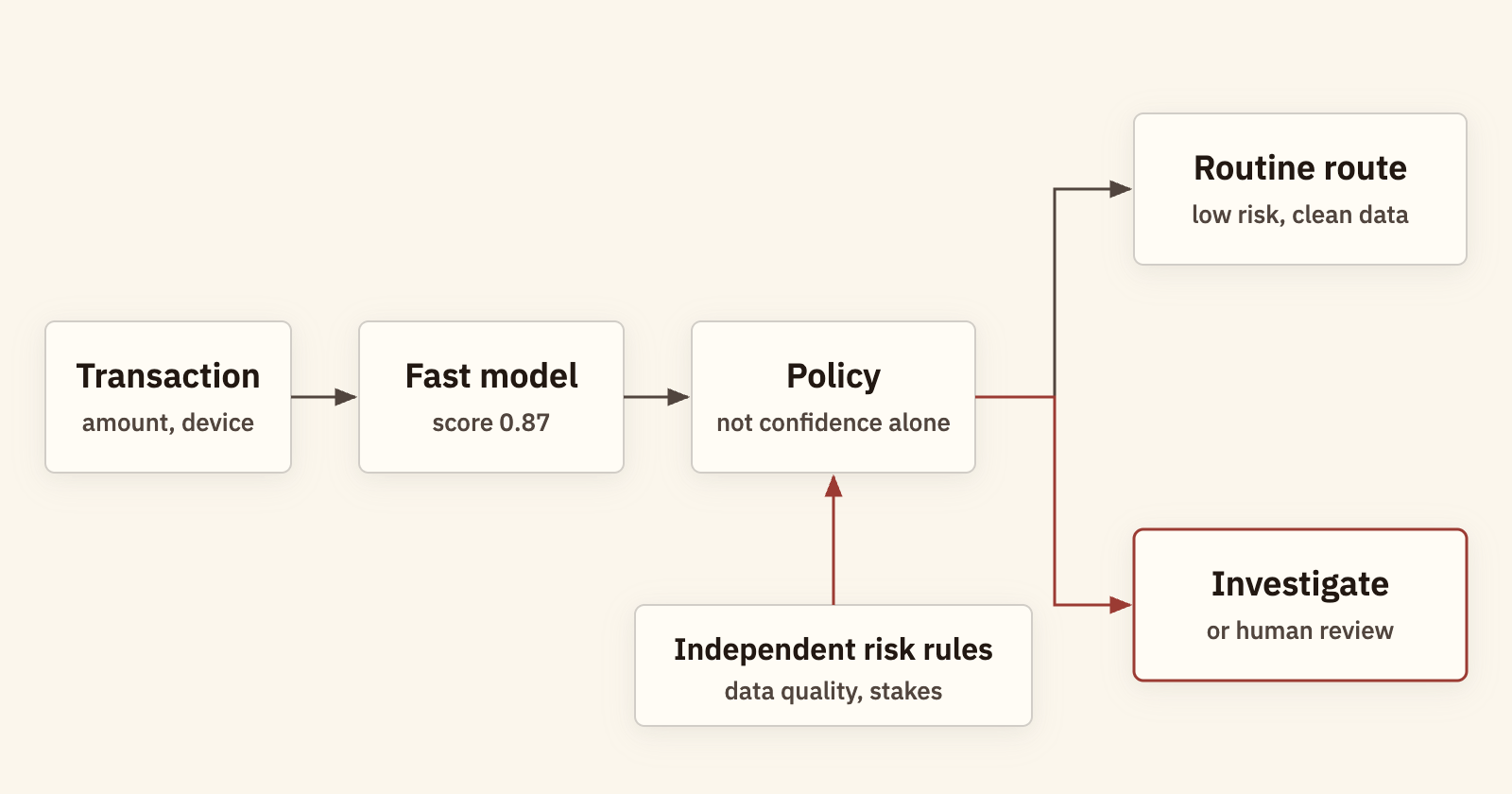
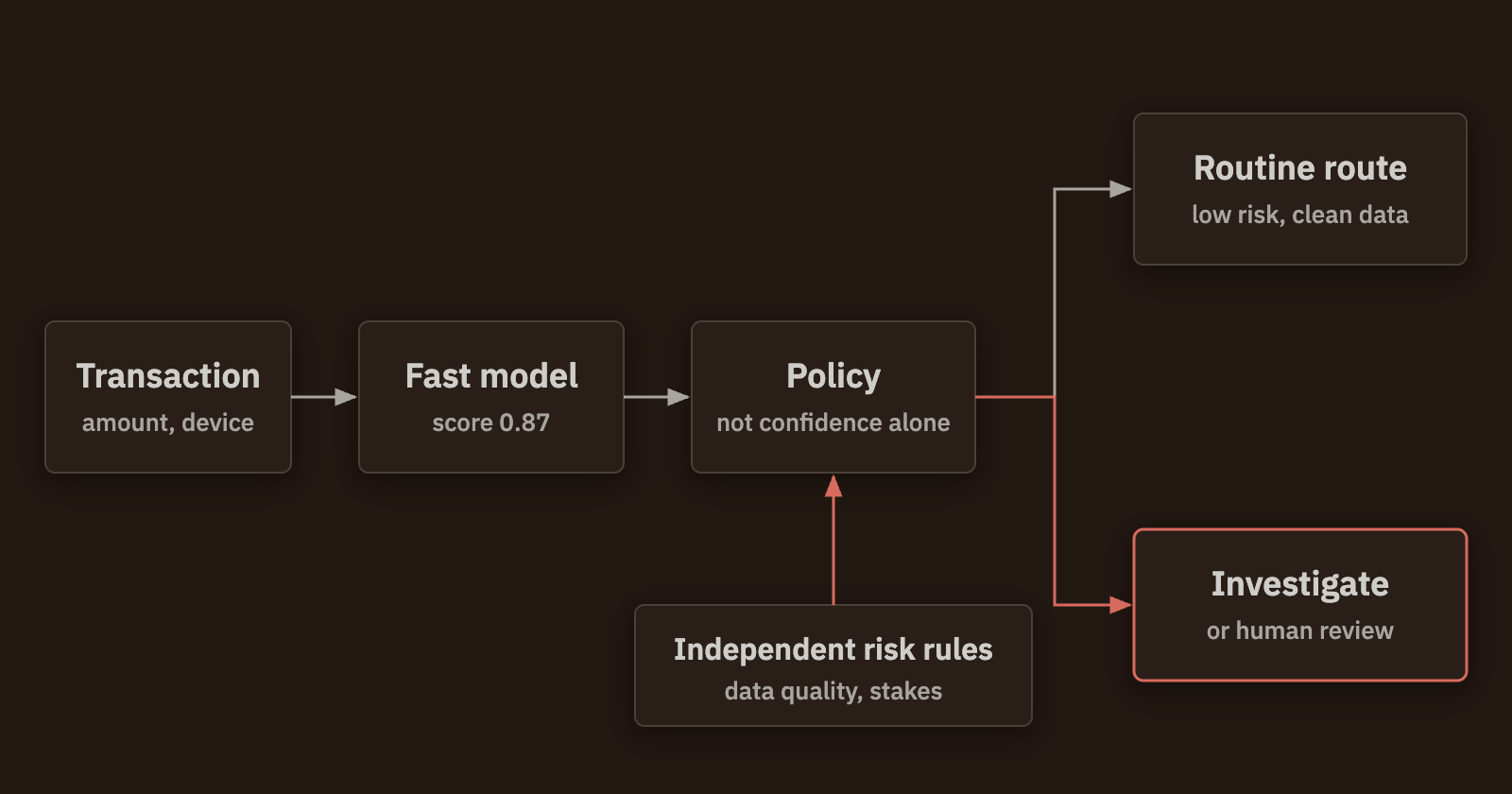
Do not route cases on model confidence alone. A model can be confidently wrong, especially when today’s inputs look different from its training data. Any automatic action needs evaluation that fits the domain.
The same pattern outside finance
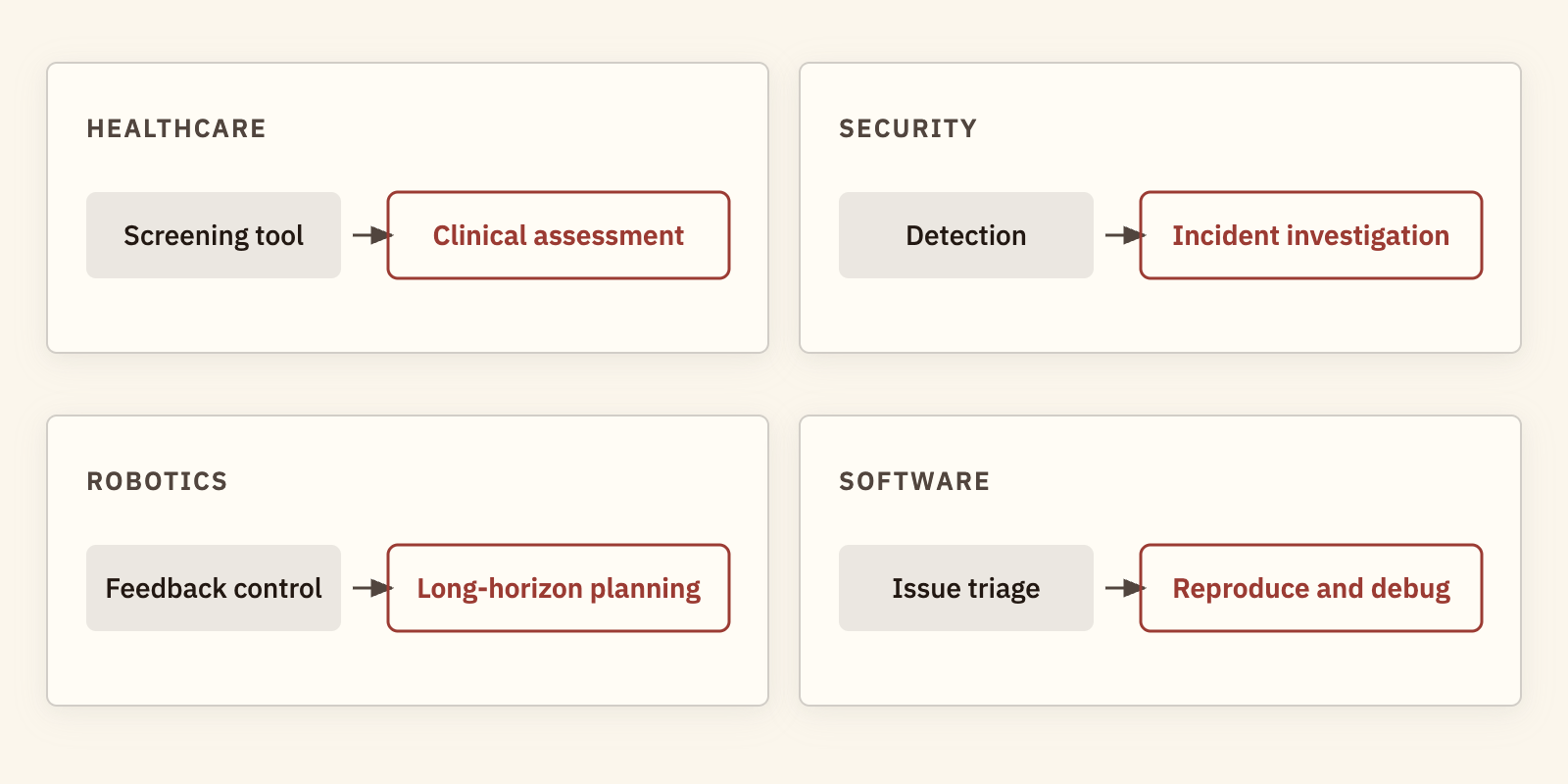
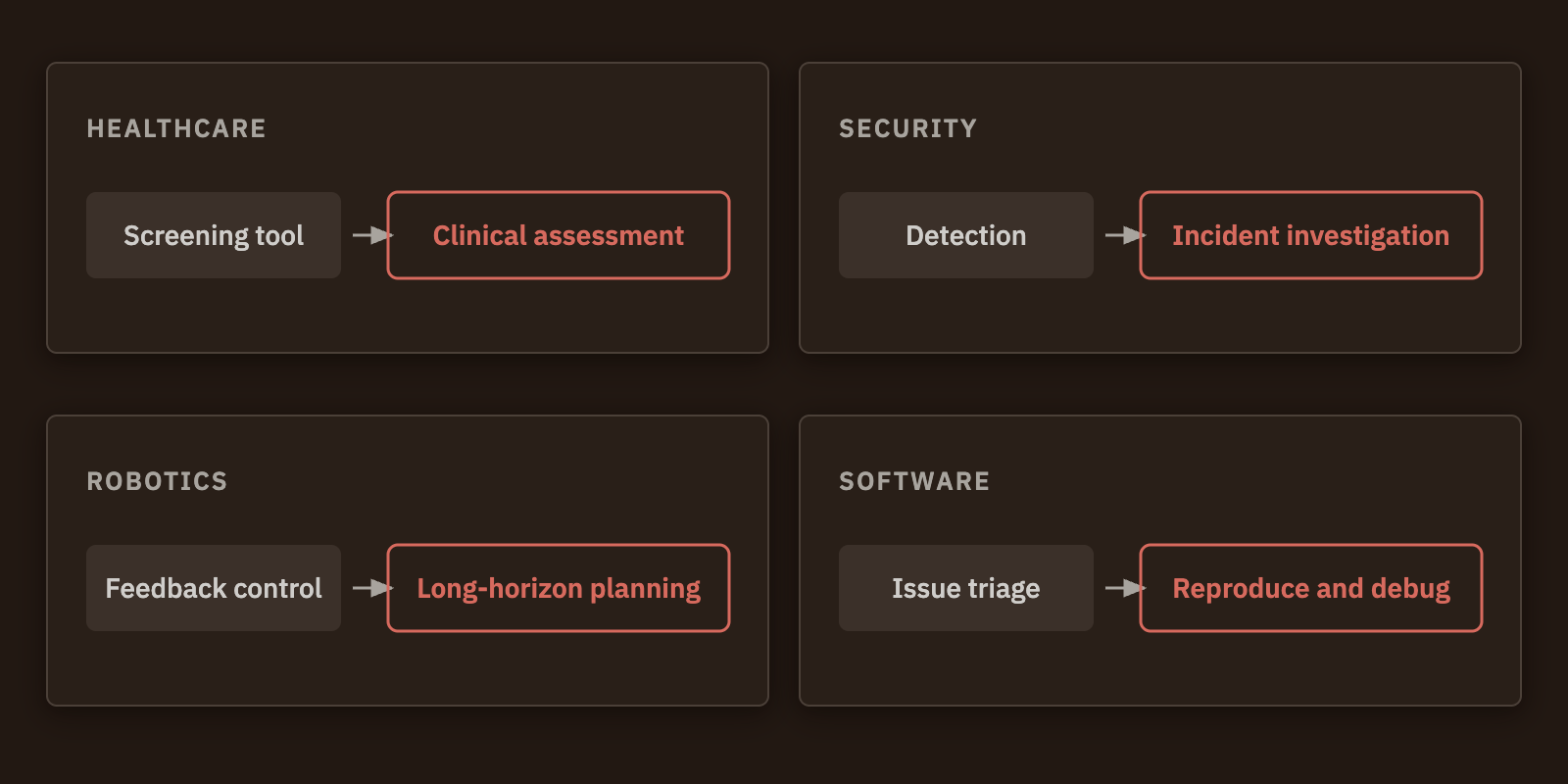
In healthcare, a screening tool can surface cases for clinical assessment instead of deciding a diagnosis on its own. In cybersecurity, high-volume detection feeds an incident investigation. In robotics, fast feedback control sits alongside longer-horizon planning. In software, incoming issues get categorized before a more expensive reproduction and debugging workflow.
These are architectural patterns. They are not evidence that any particular model is validated for a high-stakes deployment. Data quality, the cost of errors, auditability, and oversight requirements differ by domain.
What Laya and JEV illustrate
Laya is an open-source reference for structured direct predictions. JEV from TypesetAI is a closed-source reference, so its internals have to be kept apart from what is publicly documented about its behavior. Neither one is a definition of System 1 AI. Predictive classifiers, learned policies, and reactive controllers are other ways to make fast decisions.
The question I take away is portable: what should be learned and predicted immediately, what should follow deterministic rules, and what deserves more computation or human judgment?
Where I land
System 1 and System 2 are useful for thinking about how a system spends computation. The goal is not to decide everything instantly, and it is not to deliberate over everything. It is to apply enough evidence, computation, and verification for what each decision costs when it is wrong.
Next, in part 2, I go one level down: how a neural network learns the parameters behind those fast predictions.